The real business before the decoration.
We start with your business, your proof and the decisions your customers need to make. Each step makes those choices visible before the next one begins.
Four decisions, not an opaque process.
You know what we examine, what is decided and what you validate before the work moves on.
- 01
Understand
We examineYour business, customers, services and the questions blocking contact.
We decideThe priority problem to make clear.
You validateThe information and proof worth keeping.
- 02
Position
We examineWhat people need to understand, believe and remember to choose you.
We decideThe message, audience and hierarchy of the site.
You validateThe wording and proof that genuinely represent your business.
- 03
Design
We examineThe content, visual system and route to contact.
We decideAn information architecture and screen hierarchy suited to the scope.
You validateThe content, form and journey choices before production.
- 04
Launch
We examineThe responsive site, contact points and local-search foundations.
We decideA checked version across the essential screens and paths.
You validateThe supplied content, working contact path and published version.
A decision, shown
A decision should be judged on screen.
Maison Aube is a studio concept, not client work. It shows how a business fact becomes a hierarchy decision, then an interface.
- Starting information
- A flower and objects shop needs its world understood before a visit or enquiry.
- Trade-off
- Let atmosphere, craft and seasonal selection come before the visit and contact section.
- Screen
- An editorial cover, “Our world”, craft, then selection and a route to visit.
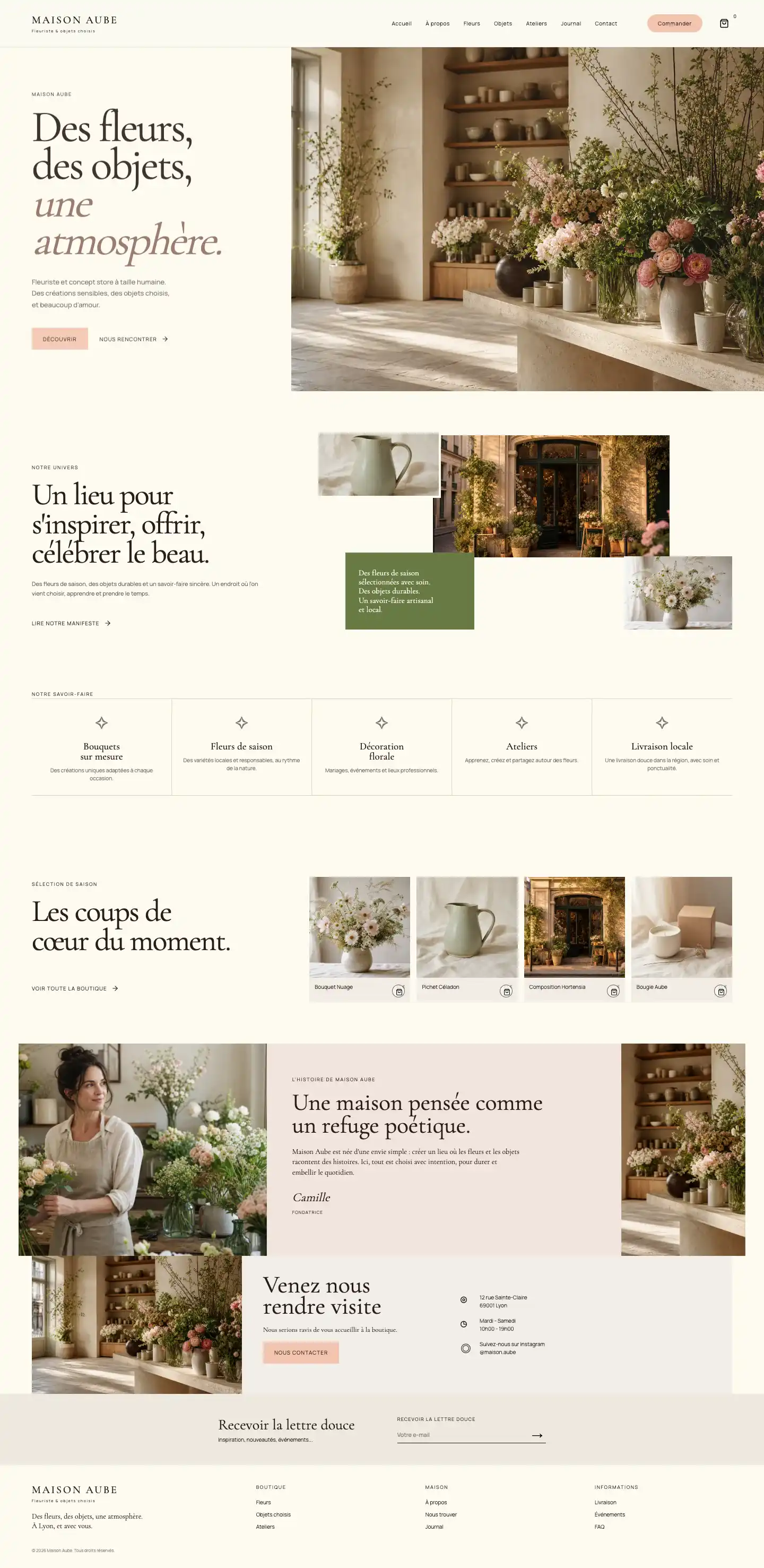
Studio concept — the capture shows a proposed hierarchy, not measured commercial results.
Prepare the ground.
You do not need a perfect dossier. We mainly need real material to make the right decisions.
- Your business and area
- Your content and proof
- Your access and practical information
Next step
Start by looking at what is already there.
The first analysis recommends the right project scope without selling you a larger rebuild than necessary.